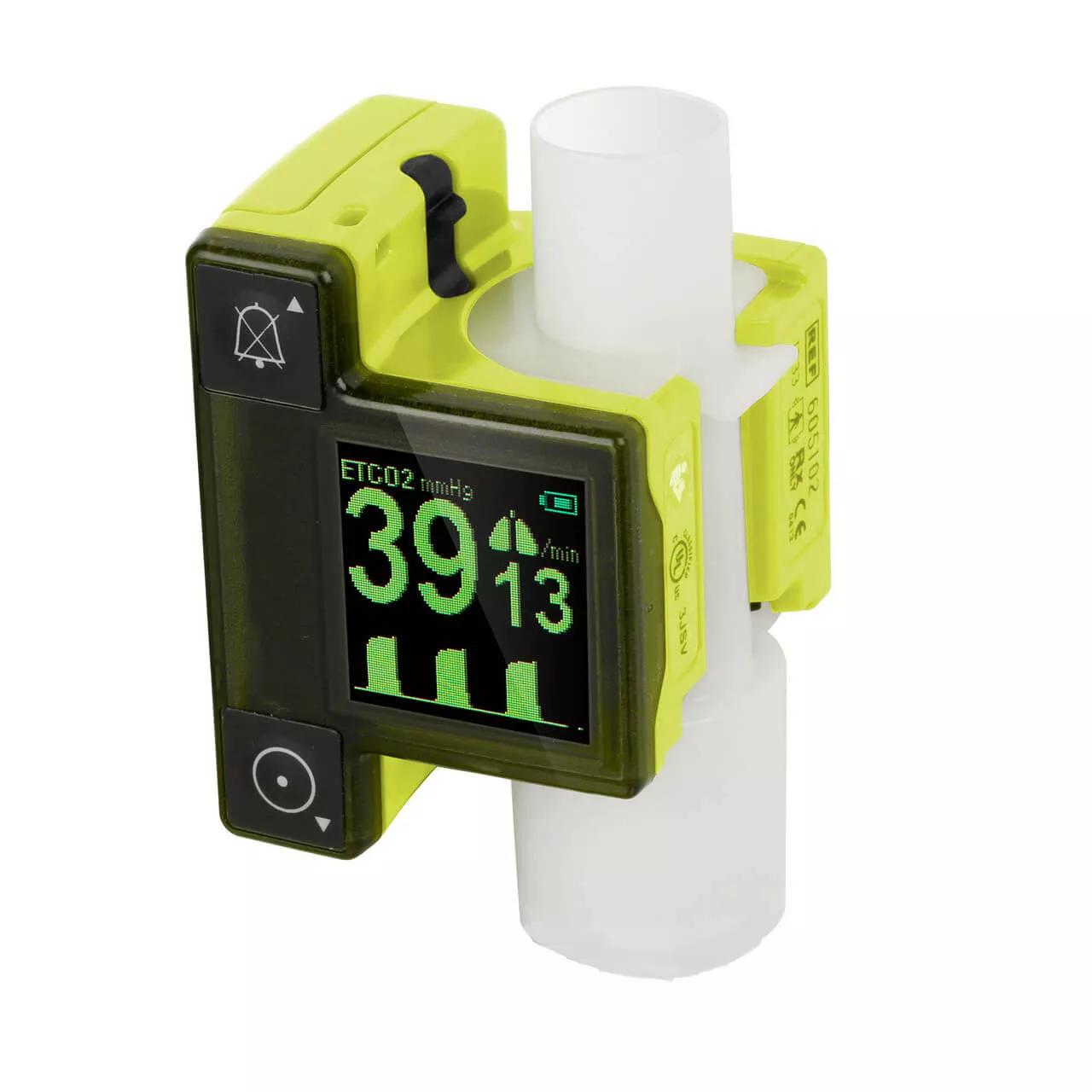
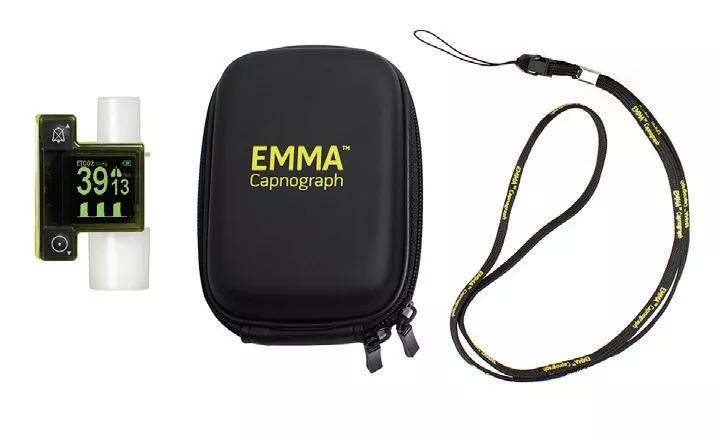
EMMA Capnometer with Accessories
Price:
- On request
Specifications:
- Measurement methods - non-dispersive infrared absorption (NDIR)
- Measured parameters - carbon dioxide concentration (EtCO2) and respiratory rate (RR), plus display of the EtCO2 waveform anywhere
- Concentration measurement range - 0 to 13.2 kPa (0 to 99 mmHg)
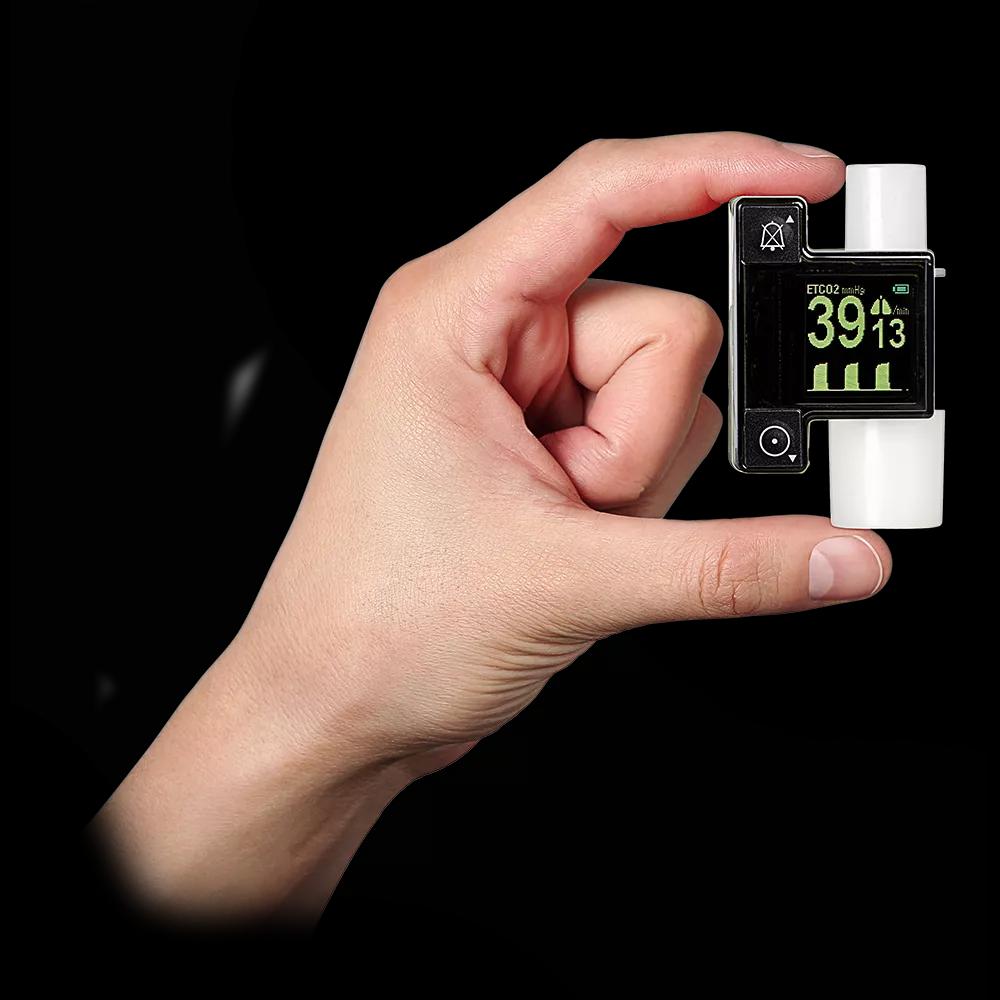
- Dimensions - 52 x 39 x 39 mm
- Weight - 60 g with batteries
- Country of origin - USA
- Medical device type code - 294440
Description
A capnograph is an infrared spectrometer designed to measure the percentage of carbon dioxide in a gas mixture. In medicine, it is used to measure and graphically display the carbon dioxide content in the air exhaled by a patient.
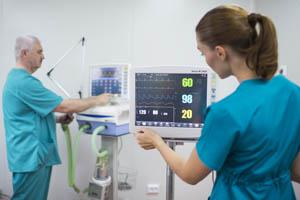
Carbon dioxide is present in the blood and is released through the lungs during breathing. Measuring the partial pressure of carbon dioxide allows an assessment of its level in the patient's blood. Capnographs are used in anesthesiology and intensive care to monitor a patient's condition during mechanical ventilation, in functional diagnostics to assess the state of the respiratory system, and in outpatient practice to monitor sudden changes in respiratory function.
In medicine, the capnograph is used to measure and graphically display the carbon dioxide content in the air exhaled by the patient. This helps assess the level of carbon dioxide in the patient's blood and monitor the state of the respiratory system.
Key Advantages
- - Portability: the EMMA capnometer is small and weighs only 60 grams, making it easy to transport and use in various settings;
- - Versatility: the device is suitable for patients of all ages, including newborns, and can be used for both adults and children;
- - Durability: the device runs on two AAA batteries for up to 8 hours, providing extended autonomous operation;
- - Ease of use: the capnometer has a simple, intuitive interface that allows the device to be configured with a single touch;
- - Safety: audiovisual alerts notify the user of various events, such as absence of breathing, loss of adapter signal, or low battery;
- - No calibration required: the sensor unit attaches to a disposable adapter and can operate standalone or as part of a breathing circuit, simplifying use.