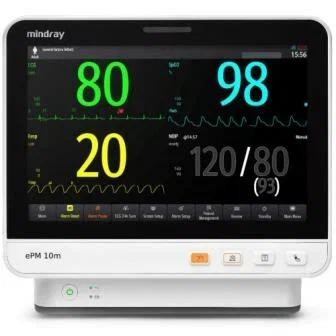
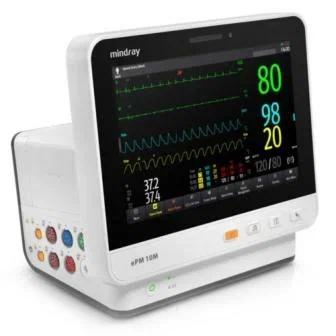
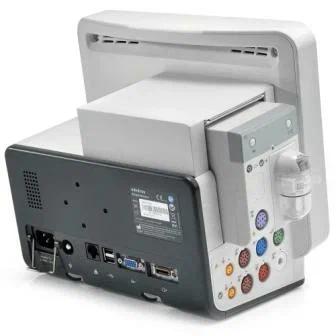
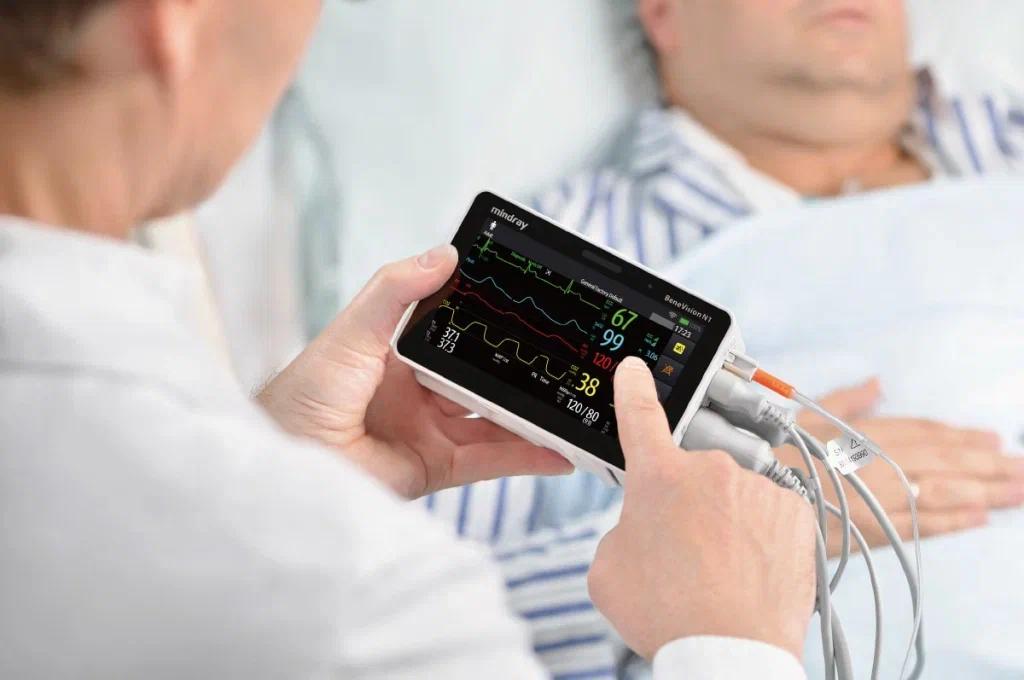
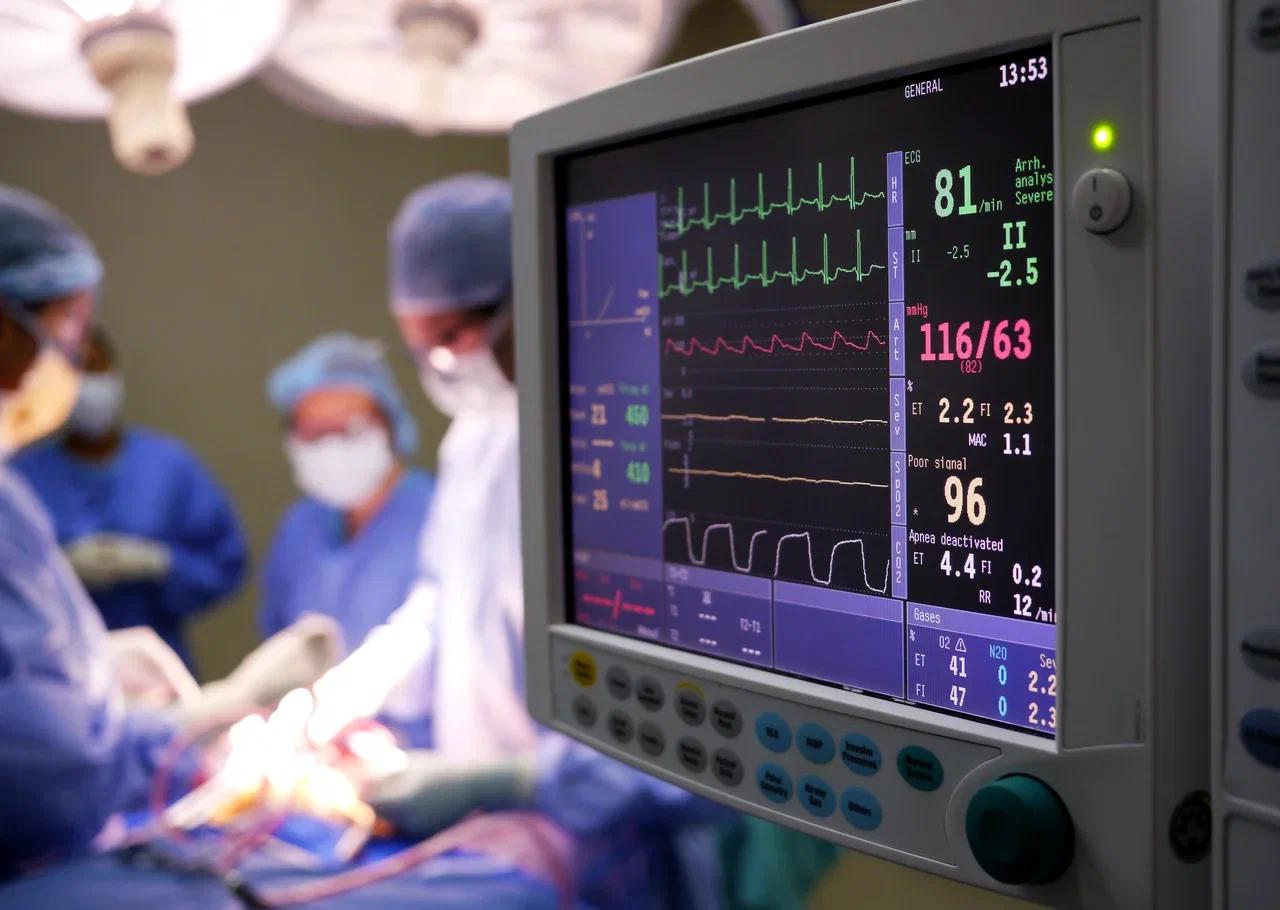
Mindray ePM 10 Patient Monitor
Price:
- on request
Specifications:
- Functions - Continuous BP, HR, and SpO2 monitoring, CMS integration, CrozFusion™, EWS, CAA, gesture control, MRI integration
- Internal memory - 48 hours
- Dimensions - 271 x 226 x 173 mm
- Weight - 3.2 kg
- Country of origin - China
- Medical device type code - 190840
Description
Neonatal monitors are medical equipment designed for the continuous monitoring of a newborn’s vital signs. They are used in neonatal intensive care units (NICU) to monitor premature infants, infants with congenital abnormalities, and other pathologies.
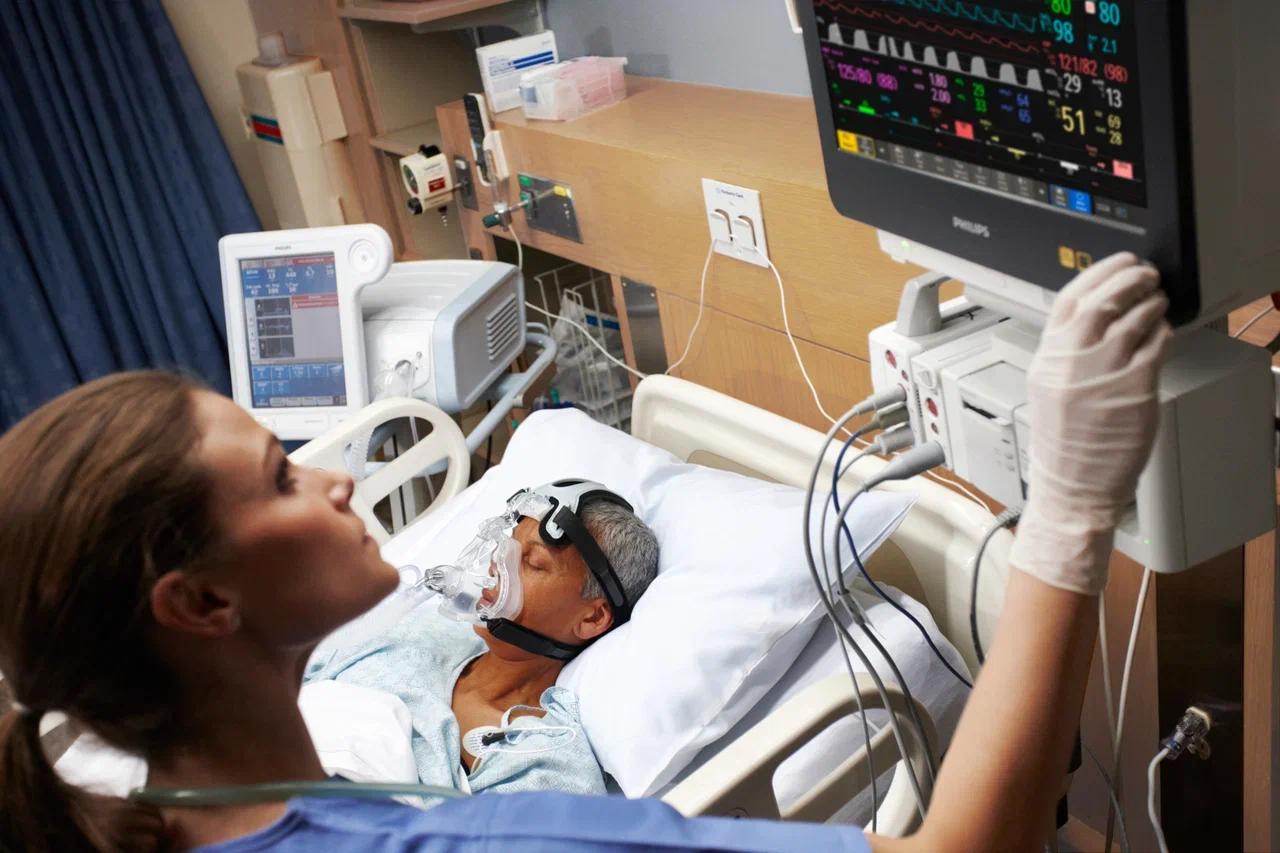
Neonatal monitors are connected to the infant using sensors that measure various physiological parameters, such as heart rate, respiratory rate, blood oxygen saturation, blood pressure, body temperature, and others. The sensors transmit information to the monitor, which displays it as graphs and figures.
Neonatal monitors are used to monitor newborns in critical condition, such as premature infants, infants with congenital abnormalities, infants with respiratory disorders, and others. They help medical staff respond quickly to changes in an infant’s condition and prevent complications.
Neonatal monitors provide continuous observation of an infant’s condition, allowing abnormalities to be detected and corrected in a timely manner. They ease the workload of medical staff, reduce time spent on diagnosis and treatment, and lower the risk of errors. Neonatal monitors improve the quality of medical care and treatment outcomes.
Key Advantages
- - thanks to modern technologies and features such as CrozFusion™, which enables combined SpO2 and ECG analysis, the ePM 10 monitor accurately measures and displays a patient’s key vital signs;
- - support for central monitoring system (CMS) integration allows medical staff to track several patients simultaneously, improving efficiency and patient safety;
- - it includes an early warning score (EWS) and computer-aided arrhythmia analysis (CAA), which promptly detect deterioration in a patient’s condition, supporting a rapid response to health changes;
- - gesture control simplifies the work of medical staff, allowing quick access to the necessary information without being distracted from the patient;
- - it can operate autonomously for up to 6 hours, making it ideal for mobile use, such as during patient transport;
- - it supports HL7 and DIAP communication protocols for interfacing with electronic medical records (EMR), easing data exchange between different information systems.